
Nexus Connect: Digital Twins
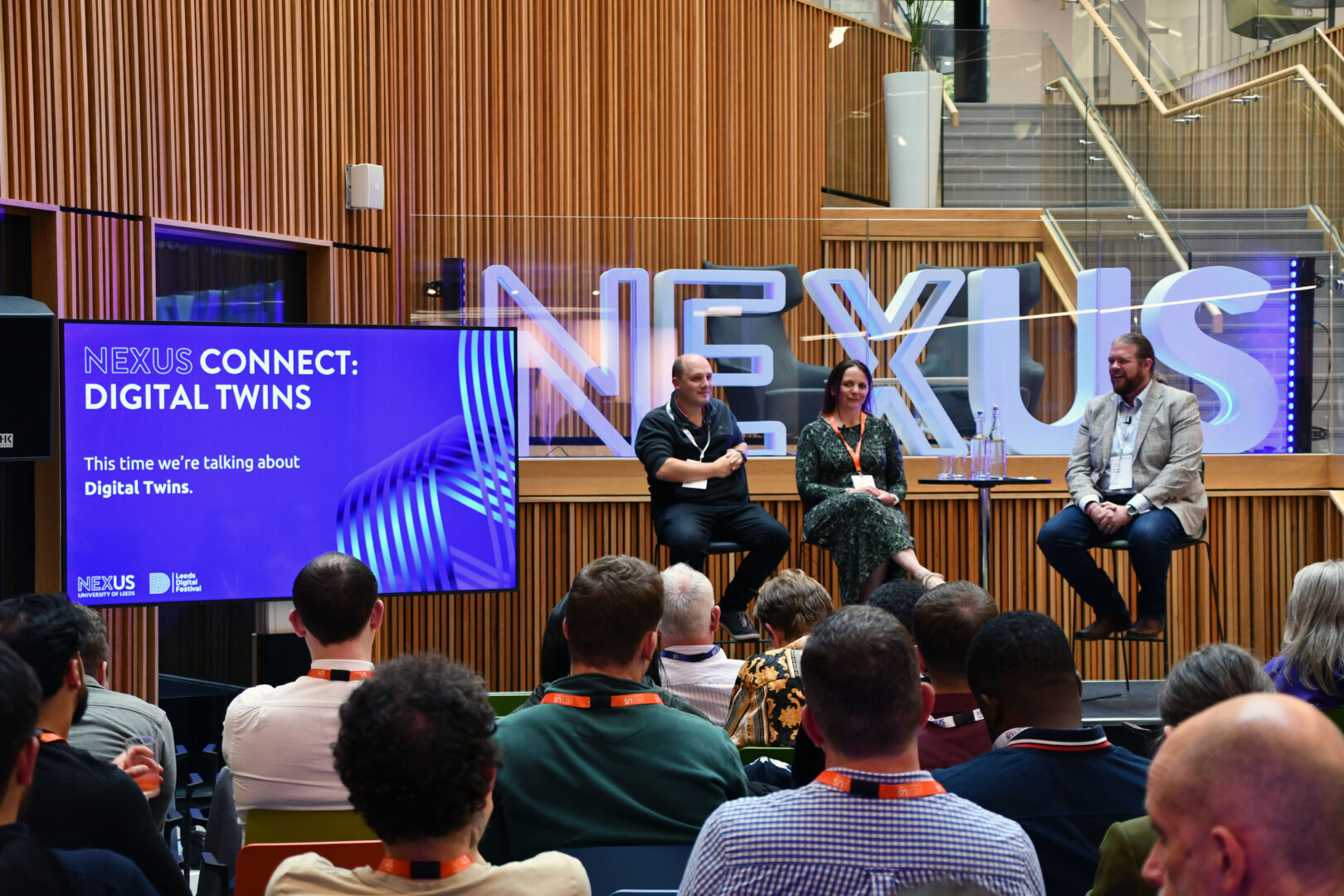
At the 14th edition of Nexus Connect, we explored the rapidly evolving world of Digital Twins, a technology already transforming sectors from healthcare and food systems to utilities and smart cities.
The event brought together members, partners, and academics to discuss how research can translate into practical solutions, and how Digital Twins are unlocking new ways to address some of today’s most complex systemic challenges.
Our expert panel included:
• Professor Michelle Morris, Professor of Data Science for Food Systems, at the University of Leeds
• Dr David McKee, Chief Technology Officer at Crysp and Digital Twin Ambassador / UK, Ireland & North America for the Digital Twin Consortium
• Dennis Dokter, Smart Cities Lead at University of Leeds, Nexus
Together, they shared their expertise on what Digital Twins are, the problems they help solve, the data they depend on, and the opportunities and risks innovators must consider.
Here’s a look back at the conversation.
Understanding Digital Twins
Digital Twins are rapidly redefining the way we understand and manage complex systems. At their core, they are digital counterparts of real‑world assets, environments, or processes that draw on live, real‑time data to reflect and predict what is happening in the physical world. Unlike static simulations or isolated datasets, a true Digital Twin is dynamic, continuously evolving as it ingests new information. This live feedback loop allows us to test “what if” scenarios, evaluate intervention strategies, and anticipate outcomes before they occur. The concept is as applicable to a single household’s energy use as it is to a nation’s food supply chain, or an entire city’s infrastructure network. Ultimately, Digital Twins serve as bridges between data and decision‑making, combining computational power with contextual understanding to inform more responsible, evidence‑based planning.
The value and application of Digital Twins
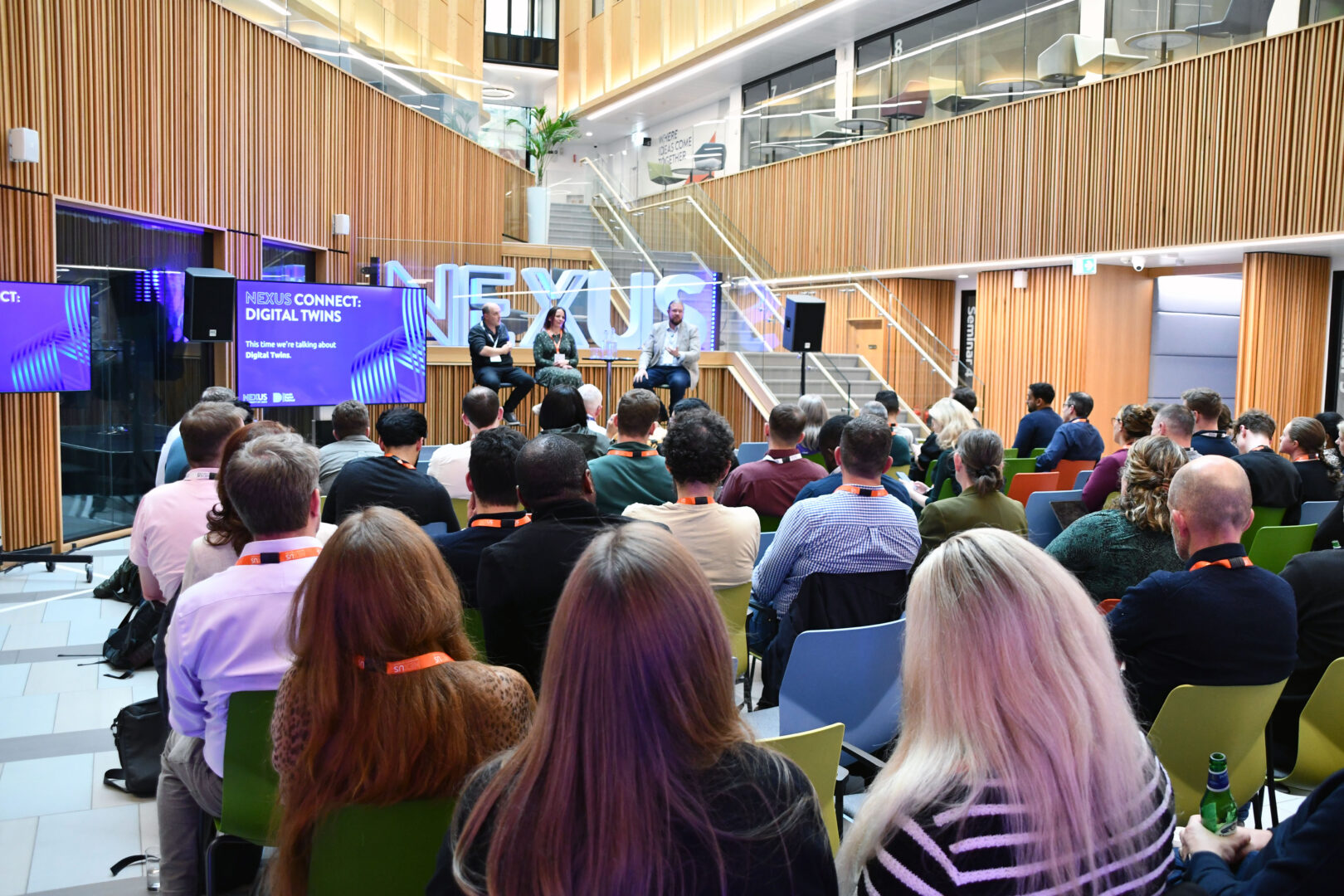
During the discussion, a central message emerged – Digital Twins are not simply technological novelties, but deeply practical tools for improving organisational performance and societal outcomes. In the food sector, they can play a crucial role in addressing global challenges by modelling the environmental implications of production and consumption, evaluating the potential health benefits of behavioural or policy changes, and exposing inefficiencies that contribute to emissions or waste.
In infrastructure, energy, and healthcare, they are being applied to optimise design, reduce safety risks, and refine operational decisions in real time. A Digital Twin of a hospital, for instance, could simulate how changes to workflows or building layout affect staff productivity or patient safety long before the first brick is laid.
At the community level, these models provide a shared, data‑driven platform for civic planning, helping local authorities and organisations make informed choices about housing, transport, and sustainability. Collectively, these examples demonstrate that the strength of a Digital Twin lies in its scalability, the ability to start small, learn fast, and expand iteratively to capture entire systems, whether industrial, environmental, or social.
Data: The foundation of every Digital Twin
Every Digital Twin depends on one foundational ingredient – data. But the panel made it clear that it is not merely the amount of data that matters; it is the quality, structure, inclusivity, and ethical stewardship that determine success. Data powering a Digital Twin must be structured in temporal, spatial, and contextual dimensions: understanding when an event occurs, where it happens, and why it matters. Yet significant challenges remain in breaking down silos that fragment critical datasets, such as unlinked hospital records, disconnected industrial systems, or proprietary commercial information.
Beyond technical integration, panellists emphasised the human dimension of data. Inclusivity is crucial to ensure Digital Twins represent entire populations, not just those with visible digital footprints. The phenomenon of “digital ghosts”, individuals or communities with little online presence, can skew results, making decisions less equitable and less effective. Ethical governance, robust consent mechanisms, and meaningful transparency must therefore underpin the entire data pipeline. Only with trust at the centre can these models become reliable tools for insight and innovation.
Challenges and barriers to adoption
While the opportunities offered by Digital Twins are significant, the panellists acknowledged that widespread deployment is still hindered by numerous barriers. Data integration remains the biggest practical hurdle. Many businesses continue to rely on legacy systems, paper records, or spreadsheets that can’t automatically synchronise, leaving critical information out of reach. Governance frameworks must evolve to manage the complex interplay of personal, commercial, and public data, each with distinct ownership, privacy, and ethical considerations. In addition to this, things can be made more complex when looking at scalability because models that perform well locally may behave unpredictably when expanded to national or global scales.
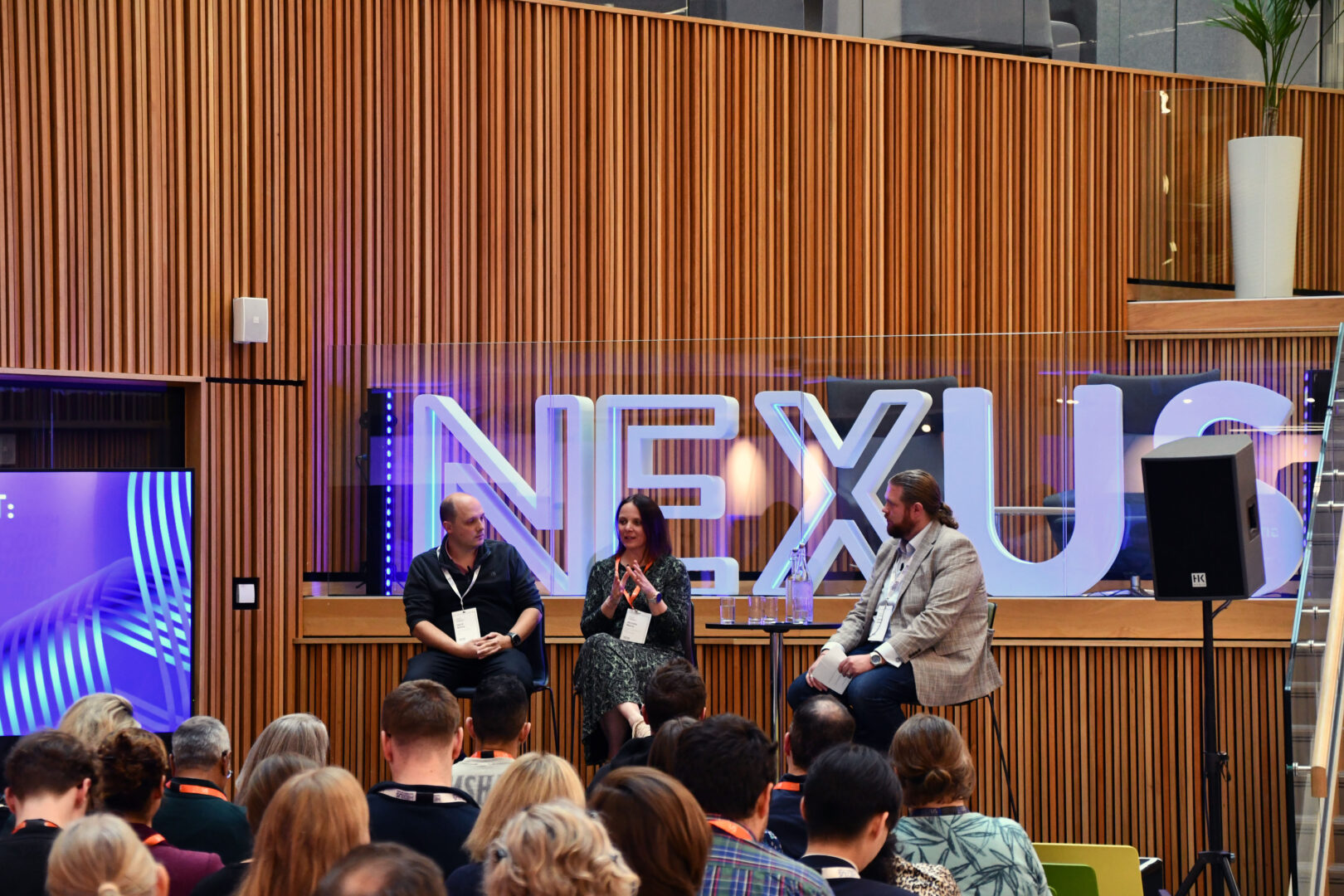
Beyond the technical layer lies the human factor – broad adoption will depend on building trust, not only in data accuracy, but also in the interpretation of model outputs. Demonstrating a clear return on investment is essential for convincing decision‑makers that Digital Twins deliver tangible value, particularly in sectors with tight budgets or risk‑averse cultures.
Collaboration across disciplines, from data scientists to policymakers, behavioural experts to engineers, is key to overcoming these challenges. The technology alone is not enough; it must be supported by strong cross‑sector partnerships and shared governance mechanisms that encourage openness rather than competition.
Emerging themes: AI, bias, and global collaboration
As the discussion evolved, new intersections came into focus, particularly between Digital Twins, artificial intelligence (AI), and global digital infrastructure. Together, these technologies are shaping the future of predictive modelling and complex decision support. Digital Twins provide the structured, context‑rich frameworks that AI systems require for meaningful analysis, while AI enhances Digital Twins with predictive and generative capabilities, allowing them to forecast system behaviours or simulate policy outcomes under different conditions. The panel also noted the emergence of “digital earth “concepts – interconnected Digital Twins of the planet that could support environmental modelling, disaster preparedness, and resource planning on a global scale.
However, such advances heighten the ethical stakes – without careful oversight, biases in data collection or algorithmic processing can escalate and compound existing inequalities. Responsible governance, domain expertise, and transparency in AI design are therefore non‑negotiable. The most effective Digital Twins are those that combine cutting‑edge analytics with a clear understanding of social, regulatory, and ethical context.
Key takeaways and the road ahead
Digital Twins represent far more than a technical breakthrough; they are a paradigm shift in how we understand and manage complexity. By drawing directly from real‑world data, they allow organisations to test interventions, anticipate disruptions, and make decisions grounded in evidence rather than assumption. Yet success will depend on more than technological capability – trust, inclusivity, and human insight remain indispensable.
To move from experimentation to large‑scale adoption, consistent investment in data integration, governance frameworks, and cross‑sector standards will be needed. Ethical considerations must evolve in step with technological sophistication, ensuring that Digital Twins enhance rather than replace human judgment.
The future’s promise lies in partnerships between government, academia, industry, and communities to develop transparent, equitable, and sustainable Digital Twins. With continued innovation and shared responsibility, these technologies have the potential to transform not only industries, but the very systems that sustain our societies.
Stay connected with Nexus to be part of ongoing discussions shaping the next generation of digital innovation.
Latest news
Nexus Meets… Shape Tomorrow
Kelly Hobson from Shape Tomorrow speaks to us as part of our Nexus Meets series.
Read article
Nexus partners with Terminus Technologies to pioneer next-generation urban data insights at the University of Leeds
Nexus, the University of Leeds’s innovation hub, has announced a landmark partnership with Terminus Technologies to deploy cutting-edge urban data mining technology at the University of Leeds, marking its first university collaboration.
Read article
Nexus’ new senior hire to drive innovation and entrepreneurship in West Yorkshire
Nexus, the University of Leeds’s innovation hub, has appointed Mark Mildren as Head of Innovation Programmes & Partnerships to lead its expanding innovation and entrepreneurship initiatives.
Read article